
MARS AND ITS EXPLORATION
WITH DR. PASCAL LEEThis 6-week short course is a compact primer about the planet MARS AND ITS EXPLORATION, past, present, and future. The course covers Mars as a planet, its evolution through time, past robotic missions, the search for life, and future human exploration.
UPCOMING
SESSIONS
ABOUT THIS COURSE

This 6-week short course is a compact primer about the planet MARS AND ITS EXPLORATION, past, present, and future. The course covers Mars’ orbital and global characteristics, its exploration history, the planet’s origin and evolution through time, its enigmatic moons Phobos and Deimos, the search for life on Mars, and the future human exploration and settlement of Mars. Included in the course are surveys of human exploration mission architectures, propulsion systems and transfer trajectories to reach and return from Mars, crew selection criteria and training, surface and subsurface exploration strategies and technologies, and prospects for resource extraction and permanent human presence.
The course is designed as foundational instruction for astronauts, space professionals, college students, and individuals with deep interest in space exploration. There are no prerequisites in any STEM field; just a strong commitment to highly focused learning in a short time. Classes are taught online in English.
WHAT YOU’LL LEARN
After taking this short course, the participant will have a professional working knowledge and understanding of Mars and of its exploration history, present programs, and future opportunities. Professionals in space and related fields, students interested in aerospace engineering, robotics, space missions, astronomy, astrophysics, earth and planetary sciences, will acquire through this course a solid foundation in state-of-the-art martian science and exploration.
SYLLABUS
This 6-week short course will be offered over a period of 6 weeks, meeting online once a week on Fridays for two consecutive hours. Assignments will consist of recommended weekly reading at three different optional levels: i. introductory; ii. topical; iii. advanced. Instructor will also offer to meet online with each participant one on one for academic and professional advising.
Mars: Origin and Evolution
Week 3
INSTRUCTOR
Dr. Pascal Lee is a planetary scientist with the Mars Institute, the SETI Institute, and NASA Ames Research Center in Mountain View, California. He is also a professor of planetary sciences at Kepler Space University. Pascal Lee studied physics and geology at the University of Paris, and obtained his PhD in astronomy and space sciences at Cornell University.
Dr. Lee’s research focuses on the Moon and Mars. He is internationally known for his work on the history of water on Mars – in particular for proposing the “Mars Always Cold” model of Mars climate evolution -, the study of ice and caves on the Moon, the origin of Mars’ moons, and planning the future human exploration of the Moon and Mars. Dr Lee has worked on several advancements in strategies and technologies for future Moon and Mars exploration, including habitats, rovers, aircraft, hoppers, drills, and spacesuits. Dr. Lee has led over 30 expeditions to the Arctic and Antarctica to study the Moon and Mars by comparison with the Earth. In 1988, he wintered over for 402 days in Antarctica at Dumont d’Urville Station in Adélie Land. Dr Lee is also founder and director of the NASA Haughton-Mars Project (HMP), the world’s leading planetary analog field research project on Devon Island in the High Arctic. As part of the HMP, he led the historic Northwest Passage Drive Expedition, a record-setting multi-vehicular expedition on sea-ice and the subject of the award-winning documentary motion picture film Passage To Mars (2016).
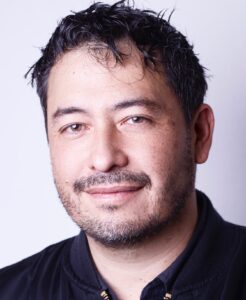
Dr. Pascal Lee
Mars Institute, SETI Institute, NASA Ames Research Center, Kepler Space University
WAYS TO ENROLL
Mars and Its Exploration
This 6-week short course is a compact primer about the planet MARS AND ITS EXPLORATION, past, present, and future. The course covers Mars as a planet, its evolution through time, past robotic missions, the search for life, and future human exploration.
PROFESSIONAL $900 USD
STUDENT $450 USD
Frequently Asked Questions (FAQs)
Who can enroll?
Students from all walks of life are invited to enroll! All you need is access to email and a strong internet connection to participate in live sessions and watch KSU educational content.